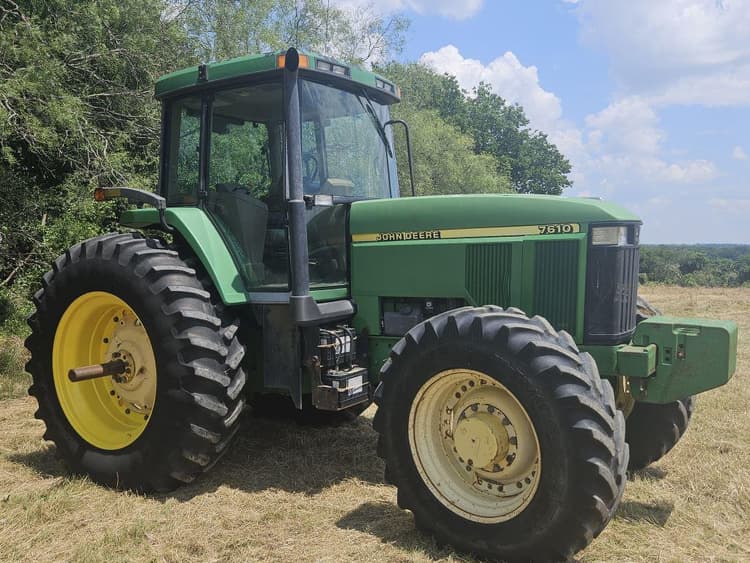
John Deere 7610 For Sale – When you look at something marked as “for sale,” you’re not only seeing an item; you’re seeing the possibility of a change, whether it’s the beginning of a new ownership, the end of a relationship with an object, or simply the result of a decision to move forward. Whether it’s vintage clothing, antique furniture, or used luxury watches, second-hand goods offer an opportunity for buyers to find quality items that are no longer available in stores. Whether buying or selling, the process requires careful consideration, transparent communication, and a thorough understanding of both the financial and operational aspects of the business. Therapists offer their services for a fee, and online courses promise to give us the knowledge we need to succeed — all in exchange for money. For the buyer, there is the risk of inheriting a business with hidden problems or liabilities that were not disclosed during the due diligence process. Electronics are another category of second-hand goods that have seen a rise in popularity. It’s a constant negotiation, where both parties seek to align their perceptions of worth and reach an agreement that satisfies both sides. Business brokers play a key role in facilitating the transaction by acting as intermediaries between the buyer and seller. In times of financial hardship, such as during recessions or periods of high unemployment, more people may turn to second-hand goods as a way to save money. The most obvious benefit is the cost savings. With the rise of e-commerce, the accessibility of quality goods for sale has expanded exponentially. Whether through their durability, aesthetic appeal, or the values they embody, these products go beyond simple transactions. Sellers can list items with detailed descriptions and high-quality photos, giving potential buyers a clear understanding of what they are purchasing. For some, selling something may feel like a sacrifice, while for others, it may feel like an investment in their future. The democratization of commerce has opened up opportunities for millions of people, giving them the chance to pursue their dreams and create their own paths to success. This can bring about feelings of uncertainty, as there’s no guarantee that the right buyer or partner will come along. The first and most obvious reason is the tangible benefits they offer. The same logic applies to tools, kitchen appliances, furniture, and even technology. The internet, for example, has created a space where anyone can buy or sell almost anything, from physical products to intangible services. For many, owning a quality product means owning a piece of history, a connection to something larger than themselves.

1999 JOHN DEERE 7610 For Sale In Powell, Wyoming MarketBook.ca
Sign up for updatesdownload our mobile appserving you since 1978financing available John deere · volvo · ford Used marketplace leaderseasy, secure way to buy100% financing available

John Deere 7610 Tractors Row Crop (+100hp) John Deere MachineFinder
Used marketplace leaderseasy, secure way to buy100% financing available John deere · volvo · ford Sign up for updatesdownload our mobile appserving you since 1978financing available

2002 John Deere 7610 MFWD tractor in Plainview, TX Item G5628 sold
Used marketplace leaderseasy, secure way to buy100% financing available John deere · volvo · ford Sign up for updatesdownload our mobile appserving you since 1978financing available

1998 John Deere 7610 tractor in Emporia, KS Item L7454 sold Purple Wave
Used marketplace leaderseasy, secure way to buy100% financing available Sign up for updatesdownload our mobile appserving you since 1978financing available John deere · volvo · ford

1997 JOHN DEERE 7610 For Sale In Elora, Ontario Canada MarketBook.ca
Sign up for updatesdownload our mobile appserving you since 1978financing available John deere · volvo · ford Used marketplace leaderseasy, secure way to buy100% financing available

2002 JOHN DEERE 7610 For Sale In Hastings, Michigan
Used marketplace leaderseasy, secure way to buy100% financing available Sign up for updatesdownload our mobile appserving you since 1978financing available John deere · volvo · ford

1997 JOHN DEERE 7610 For Sale In Elora, Ontario Canada MarketBook.ca
Sign up for updatesdownload our mobile appserving you since 1978financing available Used marketplace leaderseasy, secure way to buy100% financing available John deere · volvo · ford

2001 John Deere 7610 Tractors Row Crop (+100hp) John Deere
Sign up for updatesdownload our mobile appserving you since 1978financing available Used marketplace leaderseasy, secure way to buy100% financing available John deere · volvo · ford
John Deere 7610 Tractors 100 to 174 HP for Sale Tractor Zoom
Sign up for updatesdownload our mobile appserving you since 1978financing available John deere · volvo · ford Used marketplace leaderseasy, secure way to buy100% financing available

2000 John Deere 7610 Tractors Row Crop (+100hp) John Deere
Used marketplace leaderseasy, secure way to buy100% financing available John deere · volvo · ford Sign up for updatesdownload our mobile appserving you since 1978financing available
With the rise of online platforms and a growing cultural shift toward sustainability, the second-hand market continues to thrive, providing consumers with more options and opportunities than ever before. Sometimes, a sale can feel like the closing of one chapter and the opening of another. Their inherent value comes not only from their physical characteristics but also from the values of durability and sustainability. In recent years, the market for businesses for sale has been affected by several global and local economic factors. Whether it’s the affordability, the environmental impact, or the opportunity to find unique items, second-hand goods provide an alternative to traditional retail shopping that is both practical and sustainable. For the buyer, there is the risk of inheriting a business with hidden problems or liabilities that were not disclosed during the due diligence process. Second-hand markets also promote the idea of a circular economy, an economic system that focuses on reducing waste and reusing products. The rise of minimalism and a desire for unique, vintage items has also played a role in the growing popularity of second-hand goods. But is this a reflection of reality? Or is it an illusion we’ve created, an idea we’ve accepted in order to make sense of a world that increasingly revolves around consumption and profit?
At the core of this idea lies the assumption that everything, no matter how unique or rare, can be exchanged. Beyond financial savings and environmental impact, second-hand goods also offer a sense of nostalgia and connection to the past. However, there’s also an argument to be made that, over time, quality goods are often more economical in the long run. Moreover, buying second-hand items allows consumers to access unique and vintage products that may no longer be available in stores, offering a sense of individuality that is often missing from mass-produced, new items. A person might sell a beloved possession to fund an important life change, such as starting a business, moving to a new city, or pursuing a dream. A piece of furniture, for instance, may hold sentimental value simply because it’s been in the family for generations. And, in a way, this is the ultimate form of freedom: the ability to buy, sell, and trade on your own terms. Second-hand items are typically sold for a fraction of their original price, making them an attractive option for individuals on a budget. For many, purchasing second-hand goods is not just about saving money, but about embracing sustainability, supporting a circular economy, and contributing to a more environmentally conscious world. Both the buyer and the seller are seeking the best possible terms, and finding common ground can be a challenge. It’s a small but significant way to make a positive impact on the planet, especially when one considers the volume of waste generated by fast fashion, electronic waste, and disposable goods. A high-quality winter coat, for example, will keep you warm and dry through years of cold weather, offering comfort and protection that a cheaper, mass-produced coat cannot match.
The idea of being “for sale” also touches on larger cultural and societal themes. Additionally, there is the challenge of integrating the business into their existing operations and ensuring that it continues to thrive under new ownership. It’s a constant negotiation, where both parties seek to align their perceptions of worth and reach an agreement that satisfies both sides. It’s a world where even personal growth, self-actualization, and emotional healing are framed as commodities, available for purchase at any time, but only if you’re willing to pay the price. Beyond practical reasons, the appeal of quality goods for sale also lies in the sense of pride and satisfaction that comes from owning something well-made. In the end, the real challenge is to navigate this world — to understand the forces of commerce that shape our lives, while holding onto those things that remain beyond the reach of money. The advent of these online platforms means that consumers can hunt for items they might have otherwise overlooked or been unaware of, sometimes at a fraction of the original cost. Negotiation is often the most delicate part of the sale process. Moreover, buying second-hand items allows consumers to access unique and vintage products that may no longer be available in stores, offering a sense of individuality that is often missing from mass-produced, new items. On the other, there’s the challenge of assessing the true value of a business, navigating the complex negotiations, and ensuring that the business is a sound investment in terms of both its financial health and its long-term viability. When consumers buy these goods, they are investing in both the product and the people behind it. A home is more than just walls and a roof; it’s where memories are made, where families grow, and where life unfolds. It carries with it a deep sense of commodification — the idea that every part of our lives, every piece of our history, every corner of our existence, has a price attached to it. For buyers, the process typically starts with identifying a business that aligns with their interests, skills, and goals. We are all participants in a vast, interconnected economy, one that doesn’t just involve physical goods but extends to ideas, relationships, and even identities. They remind us that, despite living in a world where everything is for sale, there are some things that remain priceless. The second-hand market is not just about saving money; it’s about embracing a more sustainable, mindful way of consuming that values reuse, repurposing, and the stories behind the items we choose to keep. What will come next? What new opportunities will arise from this decision? When an item is placed “for sale,” it’s not just the object that’s changing hands; it’s often a reflection of the personal changes happening within the seller. As more people embrace the idea that everything has value, second-hand goods will continue to be a central part of the way
Quality goods for sale have always held a special place in markets around the world, captivating consumers with their promise of durability, performance, and timeless appeal. These items are often crafted with a sense of purpose, where every stitch, joint, and component is carefully considered to create a product that not only functions well but looks beautiful in the process.